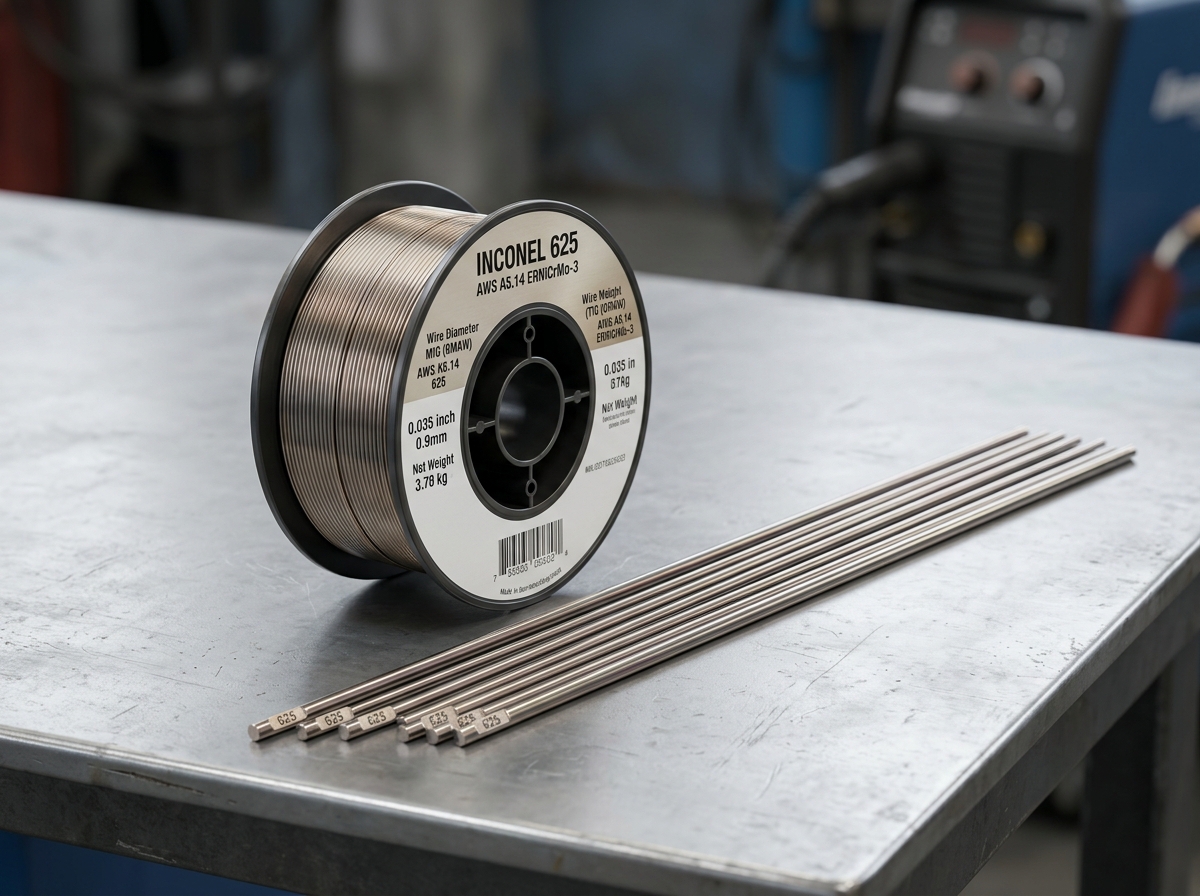
Choosing between TIG and MIG welding is not always easy, especially when you are working with a material like Inconel 625 filler wire. Both processes can work, but they behave differently with this alloy. The results you get depend on your application, the base metal thickness, the joint type, and the skill level of whoever is holding the torch. This post breaks down both processes in a practical way so you can make a better decision for your specific job.
Understanding Inconel 625 Filler Wire
Inconel 625 is a nickel-chromium-molybdenum alloy. It handles high temperatures well, resists oxidation, and holds up against pitting, crevice corrosion, and chloride stress corrosion cracking. These properties make it a standard filler material in industries like oil and gas, aerospace, chemical processing, and marine fabrication.
The inconel 625 chemical composition typically includes nickel as the base element at around 58% minimum, chromium between 20 and 23%, molybdenum between 8 and 10%, and niobium plus tantalum between 3.15 and 4.15%. Iron, cobalt, and other trace elements are also present in smaller amounts. The inconel 625 filler wire chemical composition is what gives it that combination of mechanical strength and corrosion resistance that most high-performance weldments need.
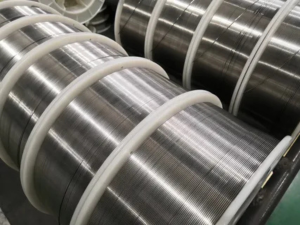
The inconel filler wire code under AWS classification is ERNiCrMo-3. This classification is worth knowing when you are specifying materials or reviewing weld procedure documentation.
TIG Welding (GTAW) with Inconel 625
TIG welding, or Gas Tungsten Arc Welding, uses a non-consumable tungsten electrode to create the arc. The filler wire is fed manually. The process runs on Direct Current Electrode Negative, and argon or a helium-argon mix is used as shielding gas. Heat input is controllable, which matters a lot with Inconel.
The biggest advantage of TIG is precision. You can control the weld puddle, manage heat input closely, and produce clean, consistent beads. Spatter is essentially zero. The finished weld looks neat, and in applications where the weld bead is visible or aesthetics matter, TIG gives better results. For root passes in piping, thin-wall components, or any joint where you cannot afford distortion or burn-through, TIG is the safer choice.
The downside is speed. TIG is slow. Deposition rates are lower compared to MIG, and the process demands a skilled welder. If the welder is not experienced with nickel alloys specifically, you can end up with lack of fusion, porosity, or hot cracking. In the case of TIG applications, the inconel 625 welding procedure generally recommends the limited heat input per pass, interpass temperature control and proper shielding to avoid contamination.
TIG is ideal for thin materials, precision joints, repair work, overlay cladding, and where weld quality is essential. This category includes a lot of aerospace and nuclear applications.
MIG Welding (GMAW) with Inconel 625
MIG welding uses a consumable wire electrode that is fed continuously through the gun. The process is run on Direct Current Electrode Positive. Inconel 625 MIG welding is usually done with an argon shielding gas with a small amount of helium or CO2. Pulsed MIG is often used with nickel alloys because it helps control heat input better than conventional spray or short-circuit transfer.
The biggest advantage of MIG is the productivity. Higher deposition rates, faster traverse speeds and the ability to run semi-automated or fully automated setups. For long welds, fill passes on thick sections, or production environments where you need throughput, MIG makes more sense economically. The operator skill requirements are also less than TIG, but working with Inconel still requires more attention than mild steel.
On the flip side, MIG gives you less control over the weld puddle. Heat input tends to be higher, which increases the risk of distortion and can affect the heat-affected zone in sensitive base materials. Depending on the transfer mode used, spatter is possible and the weld appearance is generally not as nice as TIG. Post-weld finishing may be required depending on the application.
MIG works well for thicker base materials, structural fill passes, and applications where production volume is a priority over weld aesthetics.
Key Factors for Choosing the Right Process
The decision really comes down to a few practical things.
Application requirements
If the job demands tight dimensional tolerances, low distortion, or a visually clean weld, TIG is more appropriate. If you need speed and volume, MIG is more practical.
Material thickness and joint design
TIG usually works better on thinner materials. MIG is better suited for multi-pass requirements in thicker sections, especially for fill and cap passes following a TIG root.
Welder skill level and available equipment
TIG takes longer to set up and demands more from the operator. Not every shop has welders trained specifically on nickel alloys. MIG is more forgiving in that sense, though process parameters still need to be set correctly for Inconel.
Cost and efficiency
TIG costs more per meter of weld when you factor in time and labor. MIG brings that cost down in high-volume production. However, if post-weld finishing or rework is needed due to MIG spatter or inconsistent beads, those savings may be reduced.
In some applications, both processes are used together. TIG for the root pass, MIG for fill and cap. This combination is common in piping and pressure vessel work where root integrity is critical, but fill efficiency matters too.
Conclusion: Making an Informed Decision
The right choice is TIG welding with Inconel 625 filler wire for critical, precision or thin section applications. MIG is better suited for thicker materials and high-production applications, or for projects where the goal is to fill large grooves quickly.
Look at your specific job requirements before deciding. Consider the base material, the joint type, the service environment the weld will be exposed to, and what finishing requirements exist post-weld. Also confirm that your filler wire specification matches ERNiCrMo-3 and that your inconel 625 welding procedure is documented and qualified for the process you plan to use.
At Bhansali Exports, we supply Inconel 625 filler wire and related nickel alloy products for both domestic and export requirements. If you need material with a test certificate or have special procurement requirements, please contact our team directly.