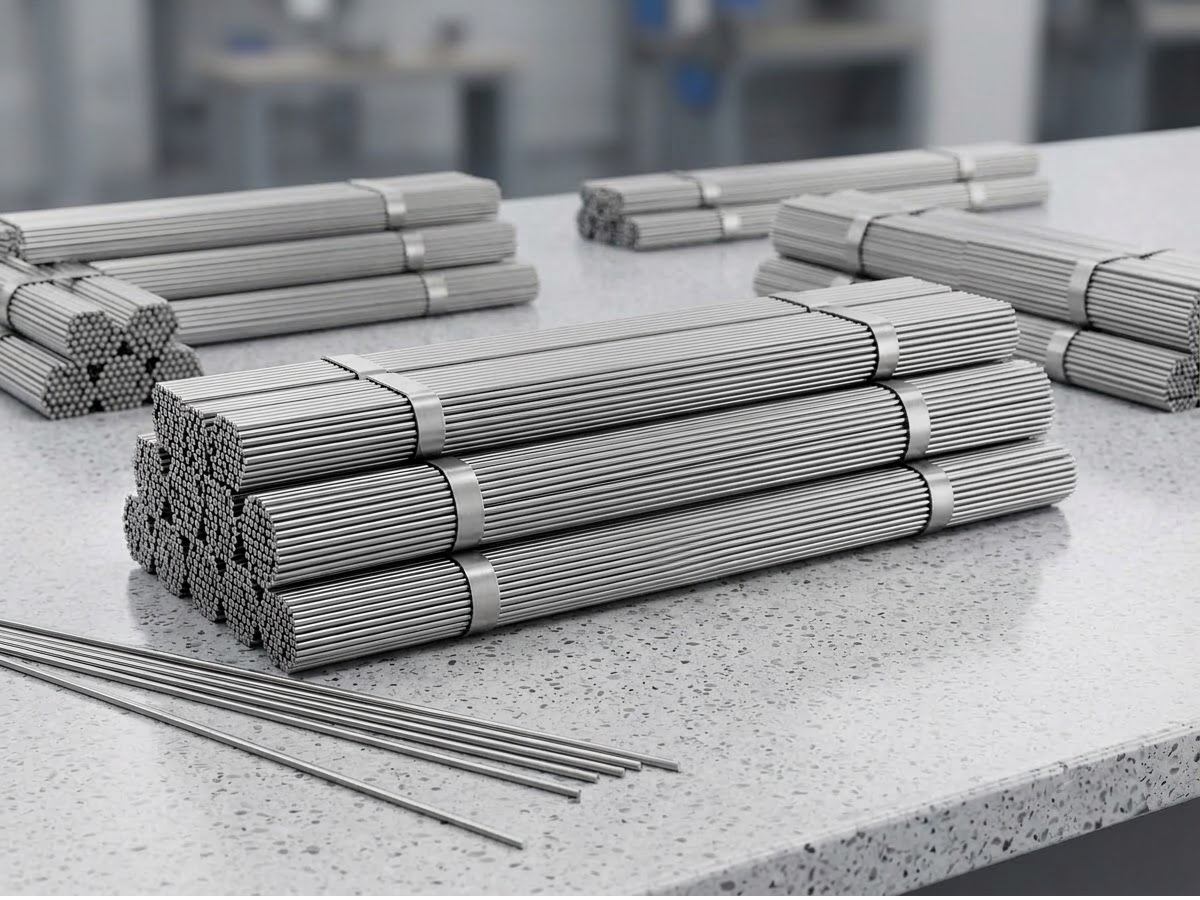
Pipeline fabricators working in oil and gas have very specific material requirements. The environments these pipelines operate in are not forgiving. Sour gas, chloride-rich media, high pressures, offshore exposure, these are not conditions where a standard filler wire is going to hold up the way it needs to over time. That is why many fabricators have moved toward Duplex stainless steel S31803 filler wire rather than sticking with conventional options like ER316L. It is not purely a preference. There are technical and economic reasons behind it, and this post covers both.
Understanding Duplex Steel S31803 Filler Wire
Duplex Stainless Steel S31803 or Duplex SS S31803 has a two phase microstructure consisting of approximately equal amounts of austenite and ferrite. This dual-phase structure is what gives the material its combination of strength and corrosion resistance that single-phase stainless steels cannot match at the same thickness.
Key Properties and Applications
The material handles well in aggressive corrosive environments. Chloride-bearing media, hydrogen sulfide exposure, seawater, these are conditions where S31803 holds up better than most standard grades. It is regularly used in oil and gas pipelines, subsea components, petrochemical processing equipment, and marine structures. The strength numbers are considerably higher than austenitic grades, which directly affects how fabricators design pipe sections and weld joints.
Chemical Composition
The Duplex S31803 chemical composition typically includes 21-23% chromium, 4.5-6.5% nickel, 2.5-3.5% molybdenum, and 0.08-0.20% nitrogen. The nitrogen content is not a minor detail. It stabilizes the austenite phase and contributes significantly to pitting resistance. The balance between nickel, chromium, and molybdenum is what differentiates this grade from standard austenitic grades under the Duplex stainless steel ASTM grades classification.
AWS Classification
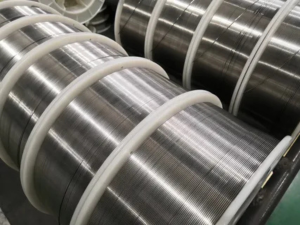
The filler wire used for welding S31803 base material is typically classified as ER2209. This wire is formulated to maintain the correct ferrite-austenite balance in the weld deposit. Using a different filler wire risks disrupting that phase balance, which can compromise the mechanical and corrosion properties of the finished weld.
Understanding Standard SS Filler Wires (e.g., ER316L)
ER316L has been a standard choice for stainless steel welding across many industries for decades. It works well in a broad range of general applications and is the preferred filler wire for austenitic grades like 316L and 304L. The L designation refers to the low carbon content, which reduces the risk of sensitization during welding.
Key Properties and Common Applications
ER316L performs adequately in mildly corrosive environments, food processing, pharmaceutical equipment, architectural work, and light chemical exposure. It is widely available and easy to work with. The limitations show up in environments with higher chloride concentrations, elevated temperatures combined with stress, and more aggressive chemical exposure. That is where fabricators start seeing failures that should not occur with the right material.
Chemical Composition
ER316L typically contains 18-20% chromium, 11-14% nickel, and 2-3% molybdenum. Nickel content is notably higher compared to Duplex grades, but chromium and molybdenum levels are lower. This affects pitting resistance and stress corrosion cracking performance in harsher environments.
AWS Classification
The AWS classification is ER316L, covered under AWS A5.9. It is a well-documented wire with established welding parameters across most processes, including TIG, MIG, and submerged arc welding.
Critical Comparison: S31803 vs. ER316L for Pipeline Welding
The comparison is not just about corrosion numbers on a datasheet. For pipeline fabricators, the question is whether the weld joint is going to survive the actual service conditions over the intended lifespan of the line.
Chloride Resistance
S31803 filler wire produces weld deposits that resist chloride stress corrosion cracking far better than ER316L. In offshore pipelines or onshore lines carrying saline water or brine, ER316L welds can develop pitting or cracking over time. The higher chromium, molybdenum, and nitrogen content in S31803 directly improves the PREN (pitting resistance equivalent number), which is the primary indicator for this type of resistance.
Strength-to-Weight Ratio
Yield strength for Duplex S31803 is roughly double that of ER316L. In pipeline terms, that means a fabricator can specify thinner wall sections to carry the same pressure. Less material used per joint. That adds up quickly on a large project.
Cost Over Project Lifecycle
The filler wire itself costs more. That is not a small consideration. But when fabricators factor in reduced wall thickness requirements, lower maintenance frequency, fewer weld repairs over the service life, and reduced downtime from corrosion-related failures, the numbers shift. For a 20-year operating life in a sour gas or offshore environment, the lifecycle math generally favors S31803.
Weldability Considerations
Both materials are weldable. But Duplex filler wire requires more controlled heat input. Too high and the ferrite-austenite balance shifts. It becomes too low, and the same problem occurs from the other direction. Interpass temperatures need to be managed carefully. Fabricators who have not worked with Duplex before sometimes find this adjustment period difficult. It is manageable but it does require attention during procedure qualification.
Why Oil & Gas Pipeline Fabricators Choose S31803
Enhanced Safety and Reliability
A weld failure in a high-pressure pipeline is not just a maintenance issue. It can be a safety incident. S31803 filler wire reduces the probability of corrosion-induced cracking at weld zones, which is one of the more common failure modes in pipelines carrying sour or chloride-bearing media.
Extended Service Life
Pipelines welded with Duplex filler wire in appropriate applications tend to require fewer interventions. That means less inspection-triggered downtime, fewer replacement sections, and lower total operating cost over the line’s life.
Compliance with Industry Standards
Many oil and gas project specifications and standards explicitly call for Duplex grades in certain service environments. The UNS S31803 equivalent material is recognized across ASTM, ASME, and NACE standards. Fabricators working on export projects or major EPC contracts often have no choice but to use compliant Duplex filler wire to pass the weld procedure qualification.
Conclusion: Making an Informed Decision for Pipeline Integrity
The core difference is clear. S31803 filler wire outperforms ER316L in environments with chloride exposure, stress, and temperature cycling. The strength advantage allows design optimization. The corrosion resistance reduces long-term risk. The cost is higher upfront, and the welding procedure is more demanding.
For general-purpose fabrication or less aggressive service conditions, ER316L remains a practical and cost-effective choice. But for oil and gas pipeline welding in demanding environments, the shift toward s31803 filler wire for oil and gas applications reflects a practical understanding of what the material needs to do over its operational life.
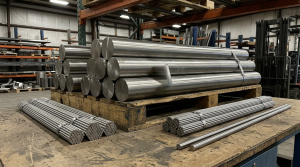
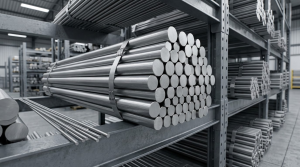
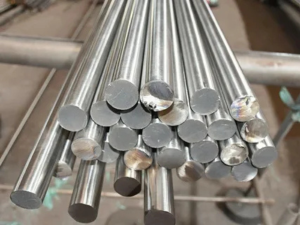
At Bhansali Exports, we supply Duplex stainless steel S31803 in round bars, wire rods, and related forms backed by material test certificates and third-party inspection support. If your pipeline welding filler wire requirements fall under Duplex specifications, our technical team can assist with grade selection and documentation.