Stainless steel 201 is a versatile alloy known for its durability, corrosion resistance, and aesthetic appeal. It is commonly used in various industrial and architectural applications. When it comes to stainless steel 201, two common forms are round bars and rods. While these terms are often used interchangeably, they can refer to different forms of the material with specific uses and characteristics. This guide will help you understand the differences between stainless steel 201 round bars and rods, highlighting their unique properties and applications.
What Is Stainless Steel 201?
Stainless Steel 201 is an alloy that belongs to the 200 series of stainless steels. It contains chromium, nickel, and manganese, providing a combination of strength, corrosion resistance, and affordability. This grade is often used as a substitute for more expensive alloys due to its cost-effectiveness while still delivering satisfactory performance.
Chemical Composition of Stainless Steel 201
- Chromium (Cr): 16-18%
- Nickel (Ni): 3.5-5.5%
- Manganese (Mn): 5.5-7.5%
- Carbon (C): 0.15% Max
- Silicon (Si): 1% Max
- Phosphorus (P): 0.06% Max
- Sulfur (S): 0.03% Max
Stainless Steel 201 Round Bars
Definition and Characteristics
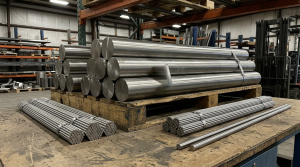
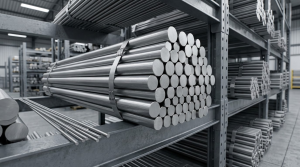
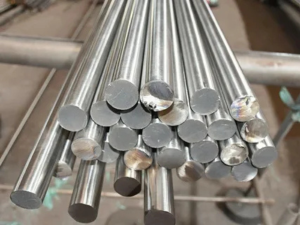
Stainless Steel 201 Round Bars are solid cylindrical sections of metal, characterized by their circular cross-section. They are produced through processes like extrusion or rolling and are available in various diameters and lengths.
Key Characteristics of Round Bars:
- Shape: Circular cross-section with uniform diameter.
- Applications: Often used in structural applications, machinery, and components requiring high strength and durability.
- Strength: Generally, round bars offer good mechanical properties and resistance to bending and deformation.
- Processing: Can be machined, turned, and forged for different industrial applications.
Common Uses of Stainless Steel 201 Round Bars
- Construction: Used in structural supports, reinforcement bars, and frameworks.
- Machinery: Employed in manufacturing components such as shafts, axles, and pins.
- Automotive: Used in parts that require strength and resistance to wear.
- Architectural: Applied in decorative elements and structural supports.
Stainless Steel 201 Rods
Definition and Characteristics
Rods refer to metal pieces that are typically long and cylindrical but can have a variety of cross-sectional shapes, including circular, square, or hexagonal. While the term “rod” can be used for a range of cross-sectional shapes, it is often used to refer to cylindrical forms with diameters similar to round bars.
Key Characteristics of Rods:
- Shape: Can vary, but often cylindrical with a diameter similar to round bars.
- Applications: Used in situations where specific cross-sectional shapes or sizes are required.
- Strength: Offers similar strength characteristics to round bars, depending on the material and dimensions.
- Processing: Can be machined, threaded, and used in various manufacturing processes.
Common Uses of Stainless Steel 201 Rods
- Manufacturing: Used in creating components and machinery parts that require precise dimensions and strength.
- Construction: Employed in reinforcing structures or as part of frameworks.
- Customization: Often used in customized applications where specific shapes and sizes are needed.
Key Differences Between Round Bars and Rods
- Shape and Dimensions:
- Round Bars: Specifically have a circular cross-section and are used in applications where uniformity and strength are critical.
- Rods: Can have various cross-sectional shapes but are often cylindrical with similar applications to round bars.
- Applications:
- Round Bars: Typically used in structural, industrial, and decorative applications where high strength and durability are required.
- Rods: Used in a wider range of applications, including those needing customized shapes or sizes.
- Processing and Fabrication:
- Round Bars: Generally produced with a focus on maintaining a consistent diameter and strength across its length.
- Rods: May be produced to meet specific dimensions and can be customized for various manufacturing needs.
Conclusion
Stainless Steel 201 Round Bars and Rods are both valuable materials in the realm of stainless steel products. While round bars are specifically characterized by their circular cross-section and are used for structural and high-strength applications, rods can have various cross-sectional shapes and are utilized in a wider range of applications. Understanding these differences can help in selecting the right material for your specific needs, whether for construction, manufacturing, or architectural purposes.