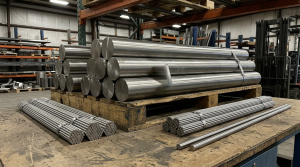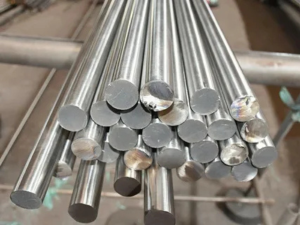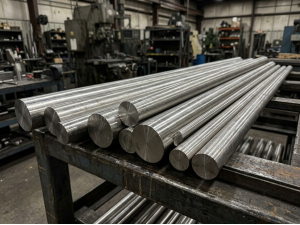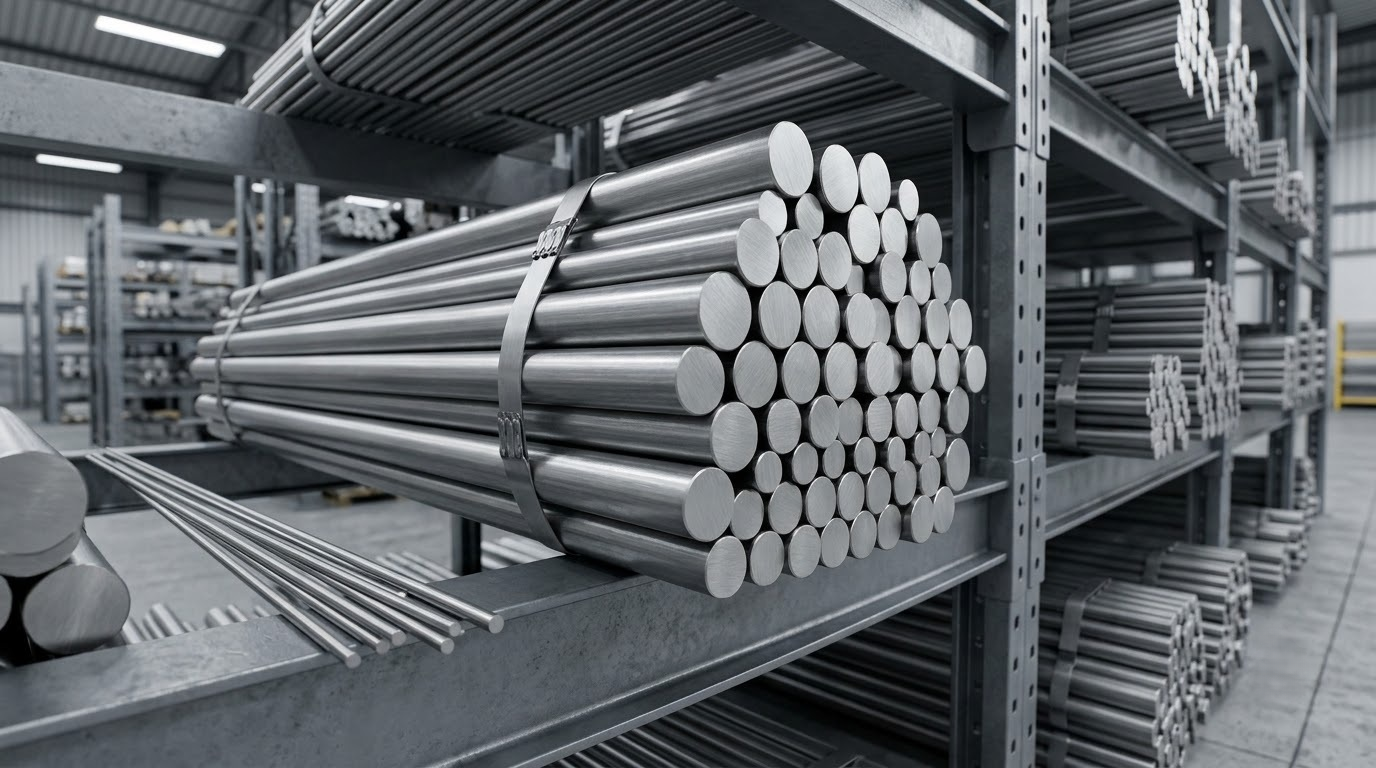
The surface finish of stainless steel 316 round bars can influence component performance, cleanability, and surface condition in service. For stainless steel round bars, the condition of the exposed surface affects how contaminants accumulate, how effectively the bar can be cleaned, and how the passive layer that provides corrosion resistance develops and maintains itself in service. Specifying the right finish for stainless steel 316 round bars requires understanding what each finish actually does to the surface and what it cannot do.
Why Surface Finish Matters for SS 316 Round Bars
Surface roughness determines how much texture the bar presents to its environment. A rougher surface holds more contamination process residues, chloride deposits, and biological matter in the valleys and peaks than a smoother surface doesn’t have. That retained contamination creates localised conditions where the passive layer breaks down, initiating pitting or crevice corrosion that would not occur on a cleaner, smoother surface in the same environment.
Mechanical processing, welding, and handling all alter surface conditions. A bar that leaves the mill with a functional surface can arrive at a fabrication shop with a contaminated or work-hardened skin that affects downstream performance. Surface finish should be considered alongside alloy grade because it can influence surface performance, but it does not replace correct material selection for the operating environment.
Common Surface Finishes for Stainless Steel 316 Round Bars
| Finish | General Characteristics | Typical Consideration |
| Mill finish | Functional surface from manufacturing | General industrial use |
| Cold drawn / bright finish | Smoother, more uniform surface | Precision and machining applications |
| Ground | Controlled abrasive finish | Dimensional and surface requirements |
| Polished | Lower roughness, improved appearance | Cleanability and exposed applications |
| Mirror polished | Very smooth, reflective surface | Decorative or specialised applications |
Finish terminology varies across product standards and specifications. Ground, brushed, and polished finishes represent progressively finer surface processing each removes more of the previous surface texture and produces a more uniform result. Confirming which designation applies to the relevant product standard avoids ambiguity at procurement.
How Surface Finish Influences Performance
Corrosion resistance. Smooth surfaces avoid contamination and facilitate more uniform formation of passive layers. The passive layer, the thin film of chromium oxide that protects SS 316 round bar from corrosion, functions best on clean, smooth surfaces. Polishing doesn’t make the bar corrosion-proof; the alloy chemistry sets the limit.
Cleanability: Deposits are removed more easily while cleaning when the surface roughness is lower. In food processing, medicinal and sanitary applications, the elimination of residues is an operational and regulatory need. Under these conditions a smooth polished surface that will release deposits with normal cleaning is better than a rough mill finish surface, regardless of alloy grade.
Wear and friction: In applications where the bar runs against another surface as a shaft, pin, or sliding component surface condition affects contact behaviour. A cold-drawn or ground finish provides more controlled dimensional and surface geometry than a mill finish, which reduces friction variation and improves predictability of wear behaviour. Polishing does not inherently increase wear resistance; the underlying alloy determines that.
Appearance and maintenance: Polished and mirror-polished finishes provide visual uniformity and resist visible surface contamination more effectively than rough finishes. For architectural, exposed, and aesthetic applications, finish specification contributes directly to how the bar performs against the appearance requirements of the project.
Choosing the Right Finish for SS 316 Round Bars
Match the finish to the functional requirement rather than selecting the finest available as a default:
- General industrial components: Mill or cold-finished surfaces where dimensional accuracy and basic cleanability are the requirements.
- Precision-machined components: Cold-drawn or bright-finished bars where surface geometry and dimensional tolerance support the machining operation and the finished part’s fit requirements.
- Hygienic applications: Polished finishes that meet cleanability requirements for food, pharmaceutical, or sanitary service.
- Architectural or exposed components: Polished or mirror-polished finishes where appearance forms part of the functional specification.
Surface Finish vs Material Grade: What Matters More?
This is where specifications sometimes go wrong. Selecting SS 316 because its molybdenum content 2–3% improves resistance to chloride pitting is a material selection decision. Specifying a polished surface finish is a surface condition decision. Both affect performance. Neither replaces the other.
A polished bar in the wrong alloy grade will still corrode in a service environment that the alloy cannot handle. A correctly specified 316 bar with an appropriate surface finish performs according to the alloy’s capability, with the surface condition supporting not substituting for that capability.
Selection summary: Specify surface finish based on the actual service requirement corrosion exposure, cleanability, dimensional precision, wear conditions, and appearance. For SS 316 round bars, a finer finish provides functional benefits in the right application, but the finish must always be specified together with the correct alloy grade and surface condition to deliver consistent performance.
Bhansali Exports supplies stainless steel 316 round bars in multiple surface conditions with full material certification contact the team to confirm available finishes, dimensions, and lead times for your specific application.