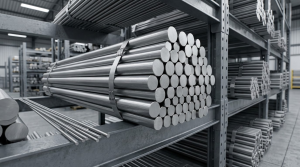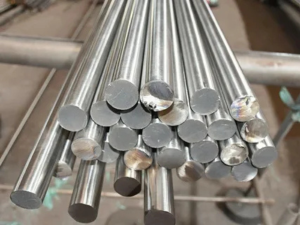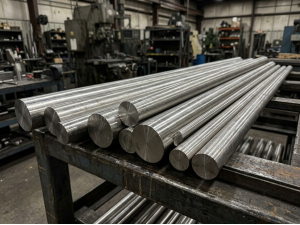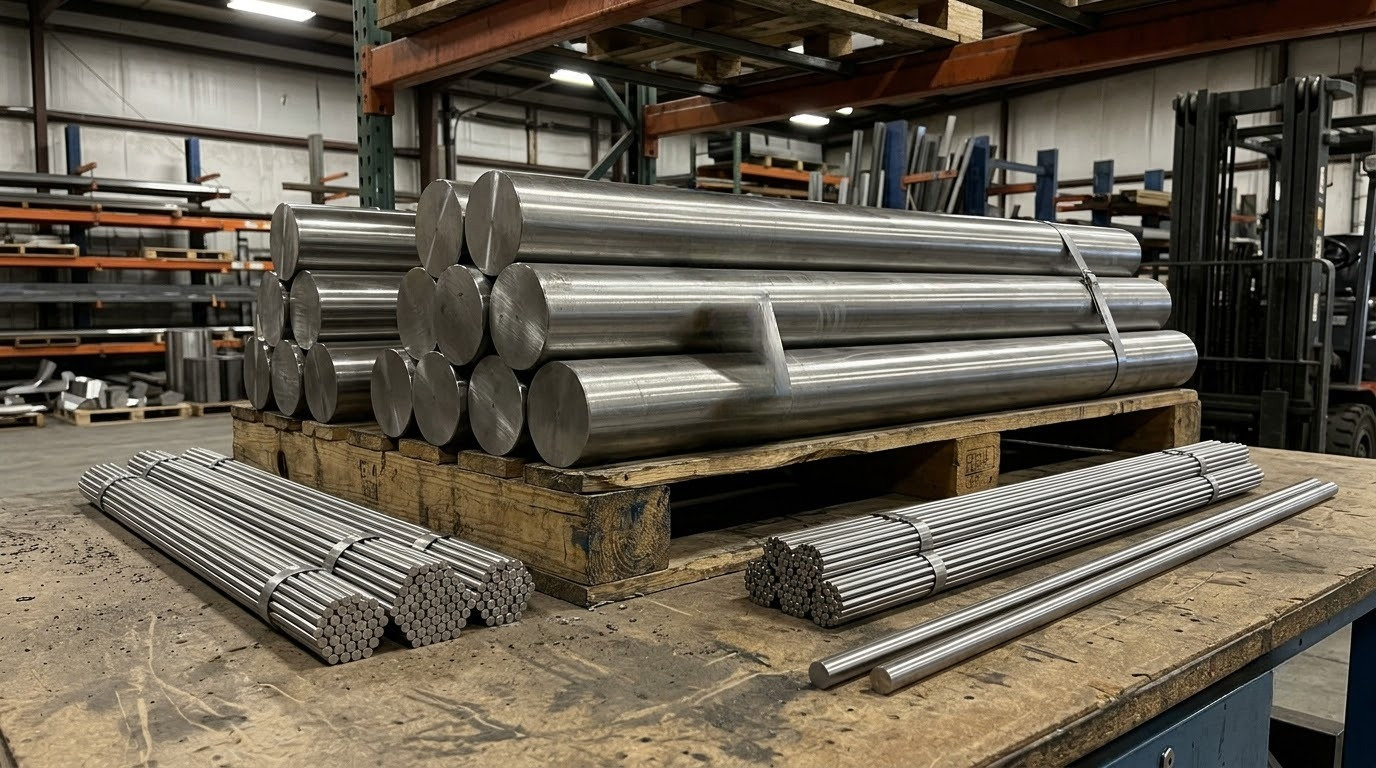
F51 and F60 are ASTM forging designation codes associated with two related but distinct duplex stainless steel specifications, UNS S31803 and UNS S32205, respectively. Both carry the commercial name “Duplex 2205” in the market, which is where the confusion typically starts. A Duplex Steel F60 Round Bar and a Duplex Steel F51 Round Bar are not the same material specification, even when both are described by the same commercial grade name. The primary differences between them involve chemical composition controls, minimum mechanical property requirements, and the corrosion performance consistency that those tighter controls deliver.
What Is a Duplex Steel F60 Round Bar?
F60 designates duplex stainless steel to UNS S32205, which was developed to refine and tighten the composition requirements of the original 2205 duplex specification. S32205 specifies a higher minimum nitrogen content and more controlled ranges for chromium, nickel, and molybdenum than the earlier S31803 composition allows. That tighter chemistry produces a ferritic-austenitic duplex microstructure with greater consistency in corrosion performance and mechanical properties across production heats. The balanced ferritic-austenitic structure delivers roughly twice the yield strength of standard austenitic stainless steel while maintaining excellent resistance to chloride-induced pitting and stress corrosion cracking. S32205 is now the most widely specified composition for new duplex 2205 projects.
What Is a Duplex Steel F51 Round Bar?
F51 designates duplex stainless steel to UNS S31803 the original 2205 duplex specification that established the chromium-nickel-molybdenum-nitrogen alloy family. S31803 permits a broader composition range than S32205, which means production heats within the S31803 specification can sit at composition limits that produce lower corrosion performance than heats at the higher end of the range. The duplex ferritic-austenitic microstructure provides high strength and good corrosion resistance in most industrial environments. S31803/F51 remains relevant where an existing engineering design, replacement procurement, or legacy project specification explicitly calls for UNS S31803 rather than S32205.
F60 vs F51 Round Bars: Key Differences
| Property | Duplex F51 | Duplex F60 |
| UNS Designation | S31803 | S32205 |
| Common Designation | Duplex 2205 | Duplex 2205 |
| Microstructure | Ferritic-austenitic duplex | Ferritic-austenitic duplex |
| Chemistry | Original 2205 chemistry range | More tightly controlled 2205 chemistry |
| Strength | High | Generally higher specified minimums |
| Corrosion Resistance | High | Generally improved consistency due to tighter chemistry |
| Selection Priority | Legacy or specification-specific requirements | Current 2205 requirements and higher specified properties |
The relationship between F51 and F60 is not simply one of strength levels. S32205 was specifically developed because the broader composition range permitted by S31803 allowed some heats to sit at composition limits that produced less predictable corrosion performance than the standard’s intent required. Tightening the nitrogen minimum and narrowing other element ranges in S32205 addressed that variability meaning F60 bars deliver more consistent properties across heats, not just higher ones.
Why Are F51 and F60 Often Called Duplex 2205?
“Duplex 2205” entered common commercial use as a shorthand for the chromium-nickel-molybdenum-nitrogen duplex alloy family, and it predates the formal split between S31803 and S32205 as distinct UNS designations. In practice, the name now covers both specifications, which is why ordering by commercial grade name alone creates specification ambiguity.
A purchase order that specifies only “Duplex 2205 round bar” without identifying the UNS number and applicable ASTM standard could be filled with either F51 or F60 material. For projects where the distinction matters, pressure vessel applications under ASME, offshore piping, or any service environment where corrosion performance consistency affects design life specifying UNS S32205 and the applicable ASTM A182 or A276 standard removes that ambiguity at the purchase order stage rather than at goods receiving.
Which Grade Should You Choose?
Most new engineering projects and procurement specifications default to F60/UNS S32205, because its tighter chemistry controls deliver more consistent mechanical and corrosion performance across production heats. Offshore piping, chemical process equipment, desalination plant components, and pressure vessel applications that specify current duplex 2205 requirements are effectively specifying S32205; the F60 designation confirms compliance with those tighter controls.
F51/UNS S31803 remains the correct specification where an existing engineering drawing, replacement component requirement, or project material data record explicitly lists S31803. Substituting S32205 for S31803 is typically acceptable in most codes because S32205 meets or exceeds S31803 requirements, but that substitution should be confirmed against the applicable design code and project specification rather than assumed. Where chloride exposure, operating temperature, and service environment are the governing selection factors, S32205’s more controlled chemistry reduces the risk of receiving heat at the lower boundary of the composition range.
Selection Summary
Choose Duplex Steel F60/UNS S32205 when the project specification requires current 2205 chemistry controls and the corresponding mechanical and corrosion property assurance those controls provide. Choose F51/UNS S31803 when the design drawing or replacement specification explicitly calls for that UNS designation. Do not treat F51 and F60 as interchangeable solely because both are marketed as Duplex 2205 they are related but distinct specifications with different composition requirements and performance consistency profiles.